
 The weather in Austin had been beautiful since I arrived on Wednesday but sometime in the predawn hours of Saturday, a thunderstorm blew in off the plains. When I awoke on Saturday morning, the rain had stopped but the temperature had dropped 20-25 degrees. It stayed cold right through Sunday — dropping into the 30s on Saturday night and as cold as I’ve ever felt at SXSW. At the many open-air gigs all over town, it was rough going for performers and audiences alike.
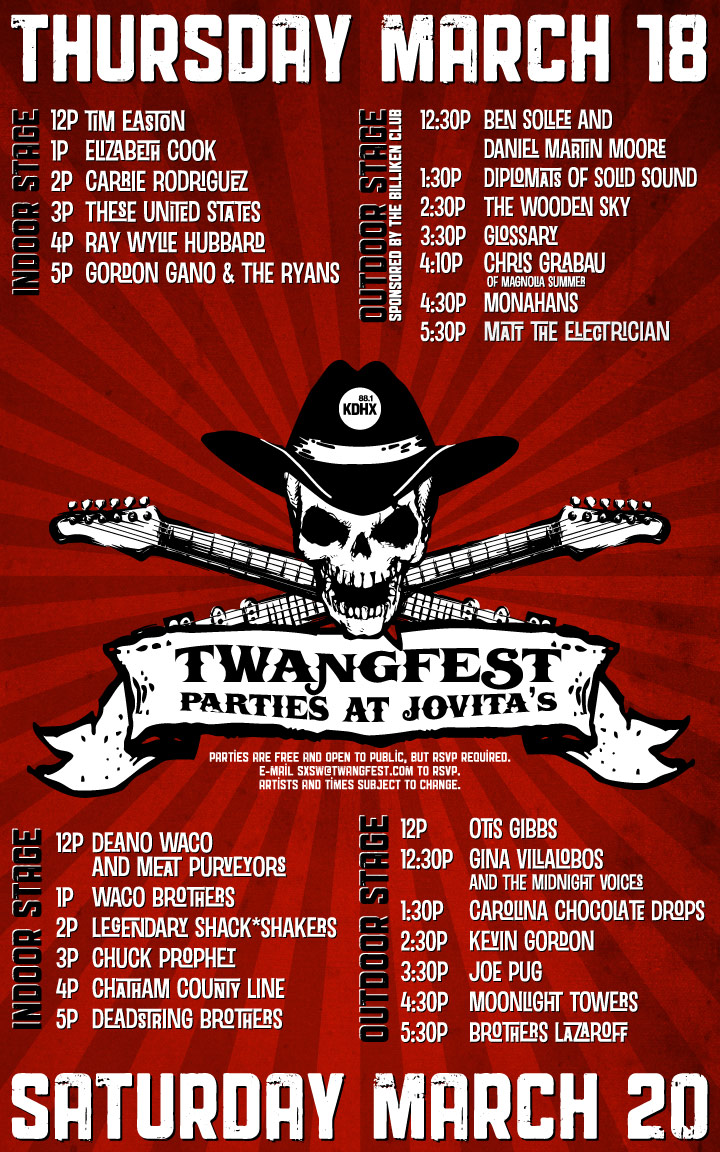
My first stop was Jovita’s, a popular Tex-Mex restaurant and bar in South Austin where radio station KDHX was sponsoring two days of its “Twangfest” parties with performances by a whole bunch of folky/rocky/country singer-songwriters including Ray Wylie Hubbard, Chuck Prophet, and Tim Easton along with the band I went to hear, the Waco Brothers. Spearheaded by the irrepressible Jon Langford, they began as an offshoot of the Mekons; the Wacos have included other members of that long-lived UK punk band, although other than Langford I couldn’t have named any of the people on stage at Jovita’s with any certainty.
The Waco Brothers still play with the energy, enthusiasm, and ragged edges one might expect of a band formed fifteen days rather than fifteen years ago. None of these guys can sing any better than I can (one reason why I don’t listen to their records) but I’ve always found the Wacos’ uproarious rebel spirit to be utterly contagious. Packed in with the crowd at Jovita’s, I was singing/yelling/cheering along from the second chorus of the first song and I don’t even know any of their songs. The set also included what was either the worst or the best version of George Jones’ “White Lightnin'” ever performed anywhere.
WACO BROTHERS - “TOO SWEET TO DIE” (Live at Jovita’s, 3.20.2010)
From Jovita’s, I moved on to Friends of Sound, a South Congress record store, where the Milwaukee soul band Kings Go Forth were set to play a mid-afternoon set on the patio. KGF’s Luaka Bop debut album, The Outsiders Are Back (released 4.20.2010), is likely to be one of my favorite non-reissue releases of 2010, and I’d be saying that even if I hadn’t been hired to write the band’s press bio (which you can read here).
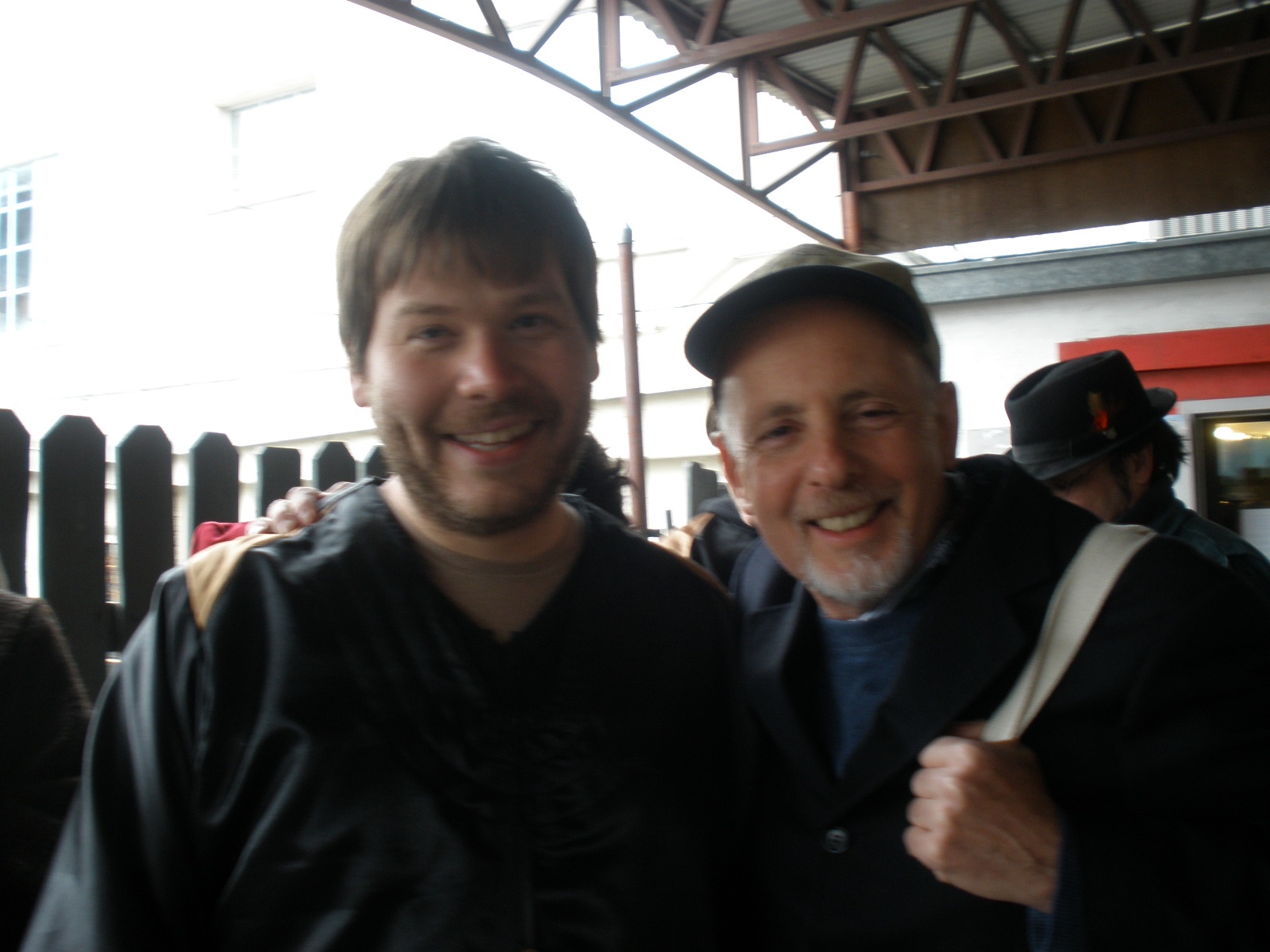
A.S. and Andy Noble of Kings Go Forth.

KGF rock the patio at Friends of Sound.
Although hewing close to their recorded arrangements, Kings Go Forth sounded great at Friends of Sound. There is much more to their instrumental sound than, say, a straight-up homage to the JB’s or the Stax/Volt house band. The Latin percussion adds a Curtis Mayfield/Major Lance flavor, the bass and drums have a churning rock power, and in the trumpet/trombone unison lines I heard the cavalry-charge quality of the horns on a classic reggae track by Burning Spear (to name one example). I also loved the harmonies of the three-man vocal group up front led by Jesse Davis a/k/a Black Wolf with Dan Fernandez and Matt Norberg. Check out this clip and see if you agree:
KINGS GO FORTH - “ONE DAY” (from the Luaka Bop album The Outsiders Are Back)
I got back in the car and drove under the I-35 overpass into East Austin. I found a small down-home gallery called Birdhouse, located in the ground floor of an aging two-story house on César Chávez Boulevard, and an mixed-media art show entitled “Where They At”. Curated by photographer Aubrey Edwards and journalist Alison Fensterstock, the show examined the New Orleans hip-hop sub-genre known as bounce music.
“Bounce music [is] a phenomenon born out of New Orleans housing projects,” wrote Edwards and Fensterstock. “Mardi Gras Indian chants, brass band beats, and call-and-response routines equally inform bounce music, which almost invariably samples the Showboys’ ‘Drag Rap’ (a.k.a. ‘Triggerman’). Its lyrical patterns focus on sex, parties, and dancing, and invites — even demands — audience participation by calling out dance steps or prompting replies.”
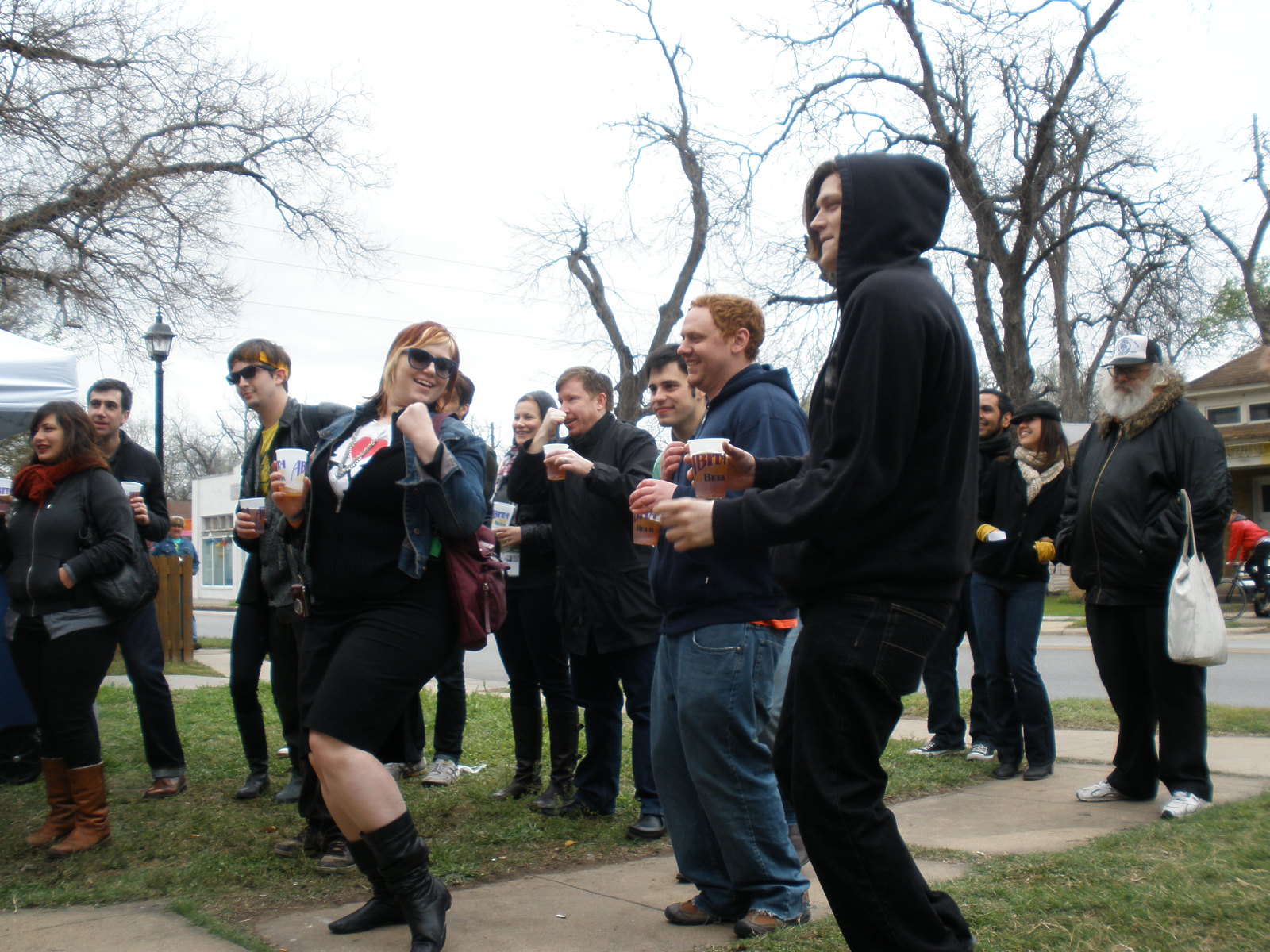
"Where They At" crowd feeling DJ Jubilee despite chilly temperatures.
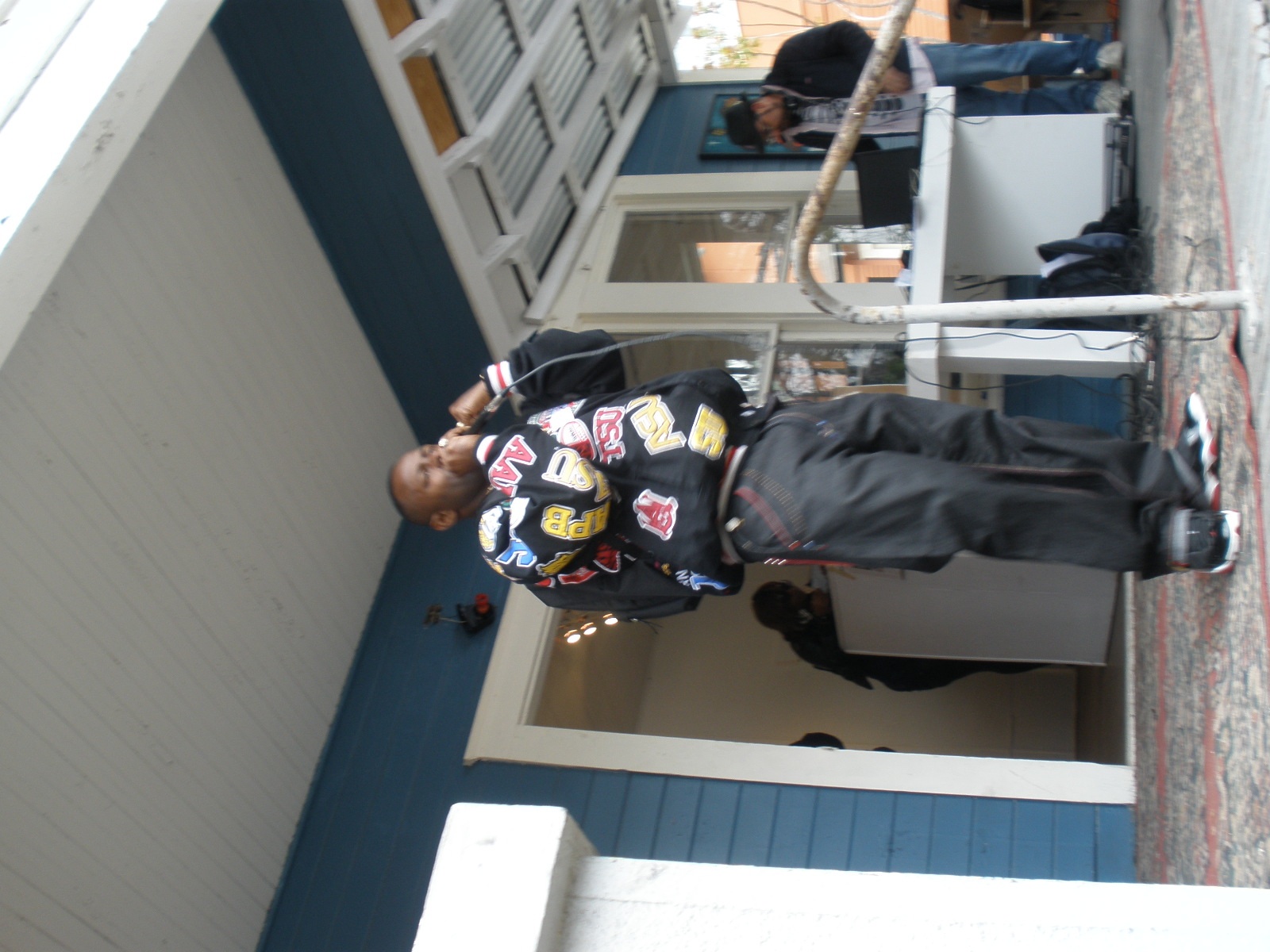
DJ JUBILEE: New Orleans' godfather of bounce at Birdhouse.
Now, until about a week earlier I’d barely heard of bounce music, which seems to have spread beyond New Orleans only recently even though the earliest recordings (cf. “Buck Jump Time” by Gregory D) appeared more than 20 years ago. But I’d been enlightened by John Swenson’s excellent essay, “A Lucky Bounce,” published in the March issue of Off Beat. Thanks to Swenson’s article, I made sure to add the Birdhouse show and Saturday night’s bounce showcase at Submerged to my SXSW must-see list. I’d also learned that bounce music, at least as practiced in New Orleans, welcomes gay, lesbian and transvestite performers — something I’d never seen at any of the hip-hop shows I’ve attended since the early Eighties.
The Birdhouse exhibit was small but well-assembled and intriguing. It include excerpts from interviews with and color photo portraits of leading bounce artists (Katey Red, Big Freedia, Magnolia Shorty) along with other shots of some pretty scary-looking New Orleans clubs where they perform. I discovered that “Where They At” had run for nearly two months in New York at the Abrons Arts Center on Henry Street (i.e. a 15-minute walk from my apartment) and I’d missed it completely. (Edwards, Fensterstock, and their “Where They At” co-conspirators have created a deep and ever-expanding archive covering two decades of bounce and hip-hop music in the Crescent City.)
It was now around 5:00 p.m. and a small but enthusiastic crowd gathered outside Birdhouse for a brief front-porch performance by DJ Jubilee. You know all that post-Public Enemy talk about “having skills” and “conscious rap”? About how a DJ’s greatness lies in his or her ability to blend the unlikely and the unexpected into a mind-melding new creation? Well, all that stuff went out the window with Jubilee and his DJ (mixing from a laptop — I didn’t catch his name). Because bounce music is dance music — first, last, and always. And if there’s a message in that music other than the demand to shake dat azz to a walloping monolithic beat (the sampled bass line of “I Want You Back” surging from the noisy murk), then I failed to grasp it.
But: There are times when shakin’ dat azz feels like not only the most fun you can have standing up but an almost profound act of personal and cultural liberation. “Put your key in the car and back it up, now back it up!” commanded DJ Jubilee as he mimed his instructions — ridiculous, right? Kindergarten hip-hop, right? Except immediately everyone started doing like DJ Jubilee. It was wonderful — a total blast of fresh air amidst the white-guitar-band overkill of SXSW and a tantalizing taste of things to come later that night.
Holly George-Warren, Geoffrey Himes, and Geoff’s old friend Greg Timm got in my car and we drove to Manor Road for a very good Southern-style dinner at Hoover’s Cooking. Holly and I then plunged back into the Sixth Street maelstrom to Red-Eyed Fly, where Exene Cervenka gave a very good if not galvanizing account of herself with the help of an all-female band featuring violinist Tahmineh Gueramy and Dead Rock West vocalist Cindy Wasserman. I enjoyed Exene’s new and recent songs including “The Sound of Comin’ Down” and “(It’s Tuesday) I’m Already In Love,” and her son Henry was kind enough to snap a souvenir photo of the occasion.
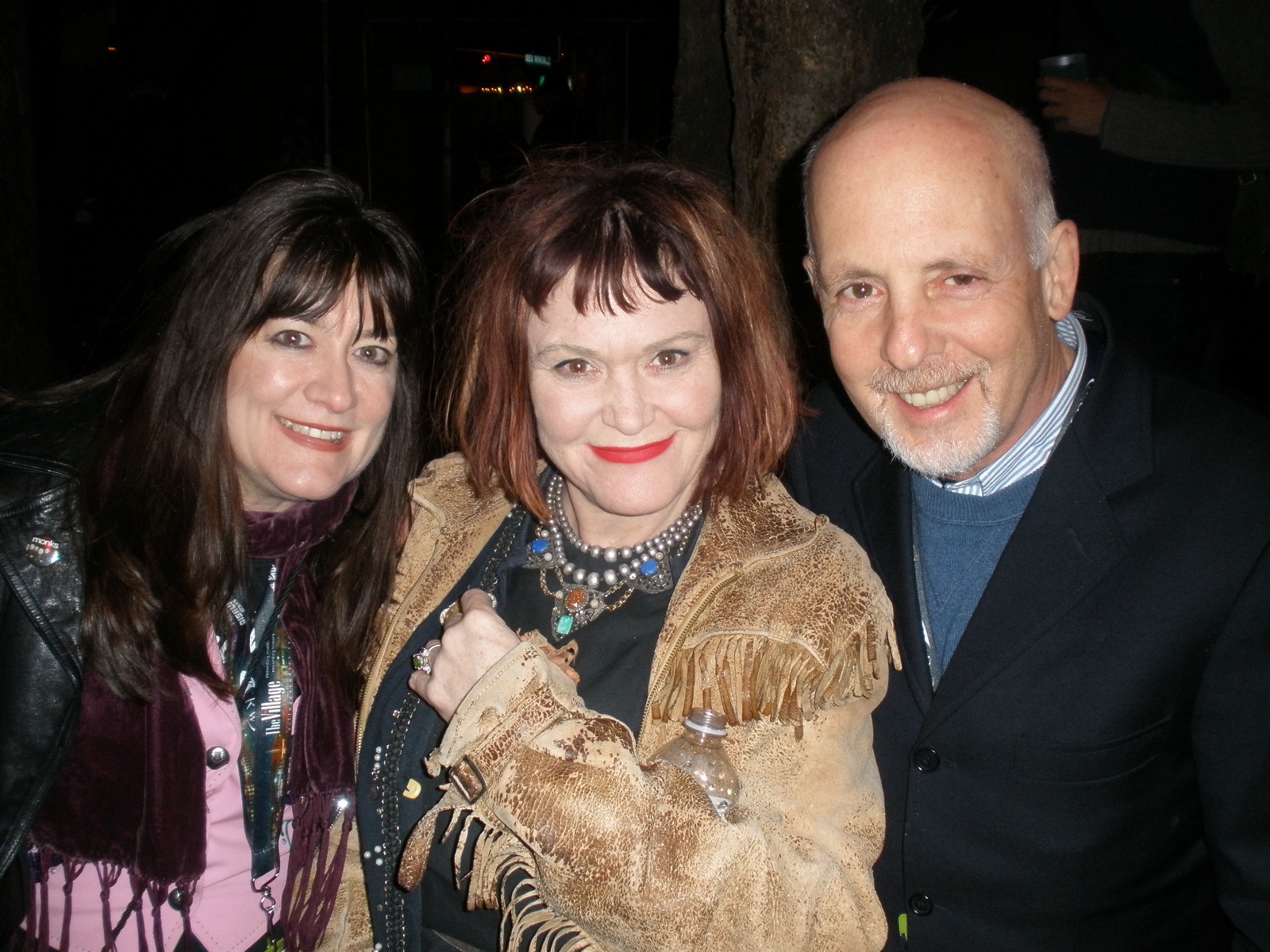
Holly George-Warren, Exene Cervenka, A.S. at Red-Eyed Fly. (Photo by Henry Mortensen)
I left Holly and went off to catch Kings Go Forth again, this time outdoors in the backyard of Galaxy. This set was at least 30% hotter than the one they’d played seven hours earlier and really lit up the crowd, few of whom seemed to ever have heard of the band before. Whatever time, effort, expense, and hassle it took to get these guys to Austin — at that moment, it felt worth doing.
It was now about 11:00 p.m. and over near the Austin Convention Center the bounce showcase was well underway at Submerged — in fact, I’d already missed Ms. Tee, Big Freedia, and (based on later YouTube research) the awesomely filthy-mouthed Magnolia Shorty. I’ve spent, like, no time in titty bars but Submerged sure looked and felt like one, with a mirrored wall at the back of its foot-high stage.
Before this post reaches an ungodly (and unreadable) length, let me just say: This show killed for the entire two hours I spent there. It had a blizzard of cross-cultural references, gender/identity switch-ups galore, some wild-ass (literally) audience participation, and a beat you couldn’t not move to. Not surprisingly, there was a large and avid multiracial gay/lesbian contingent in attendance. I couldn’t see too well from the back of the crowd, but it appeared that at various points in the show some female audience members took to the stage as unpaid extras to (you guessed it) shake dat azz.
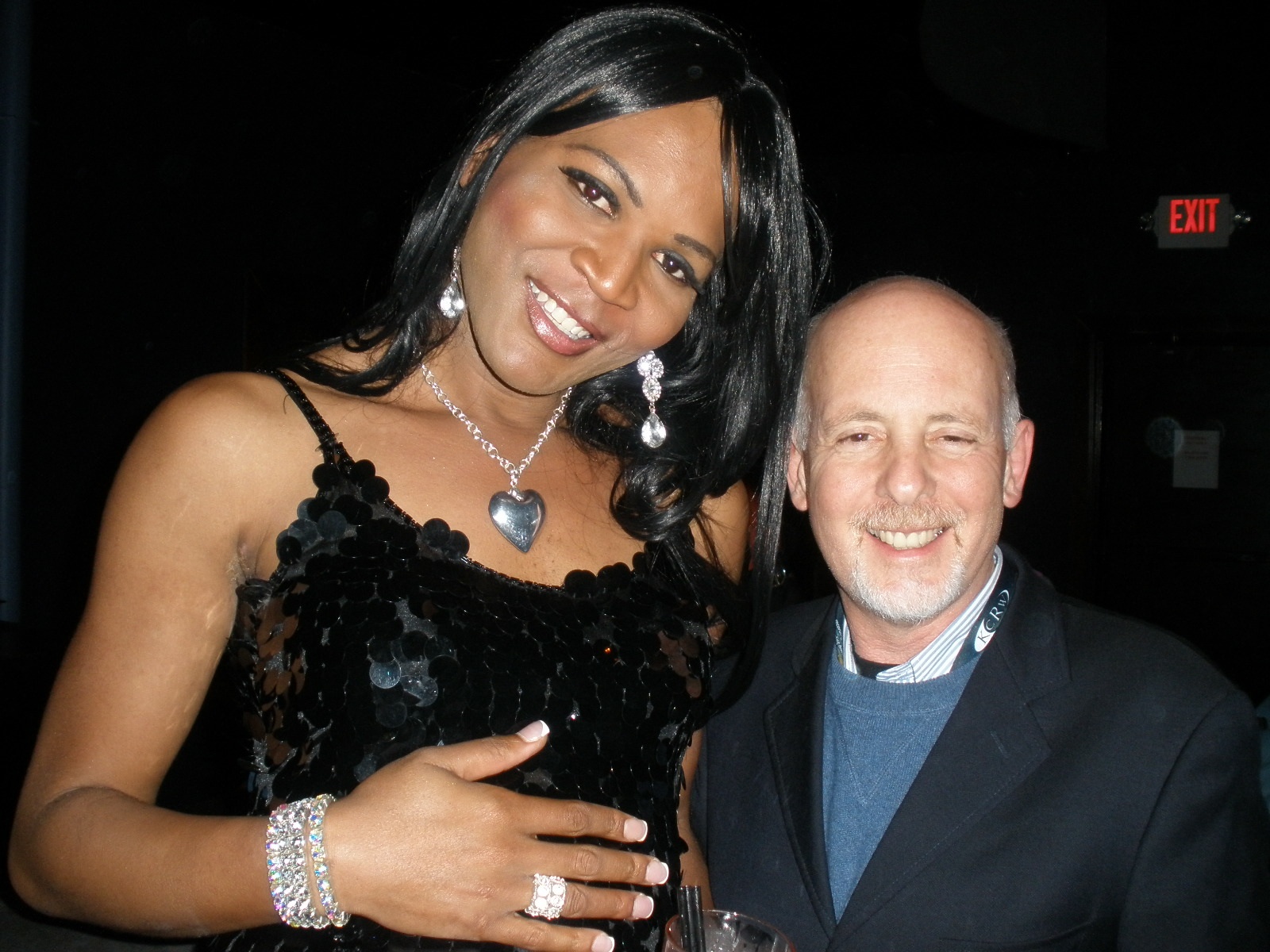
KATEY RED and her new pint-sized sidekick "Shrinky Schwartz" at Submerged.
I watched in wonder as the mind-bending Vockah Redu (wearing a visor constructed from cigarettes and “smoking” a stick of incense) was followed by the towering transsexual rapper Katey Red with her cheerful rhymes of anal sex, prostitution, and drug-taking. I also dug the versatile straight male rap duo Partners N Crime (who mixed some nice reggae bits with their NOLA funk) but after the sex-party-in-outer-space atmosphere created by Vockah and Katey, the dire street-warfare warnings of MC Black Menace‘s “Put On A Vest” (“or you gonna need a blood donor, nigga”) seemed almost quaintly old-fashioned. Joining me for this wildest of SXSW parties were a few other middle-aged rock-crit types including John Swenson, Bill Bragin of Lincoln Center Out of Doors, and the New York Times’ Jon Pareles, who later called the Submerged show “one of the best events at the festival.” For a 41-second taste of the vibe of this unforgettable show, click on this YouTube clip of Katey Red live in 2007.
Andy Schwartz at South X Southwest 2010 (earlier posts)
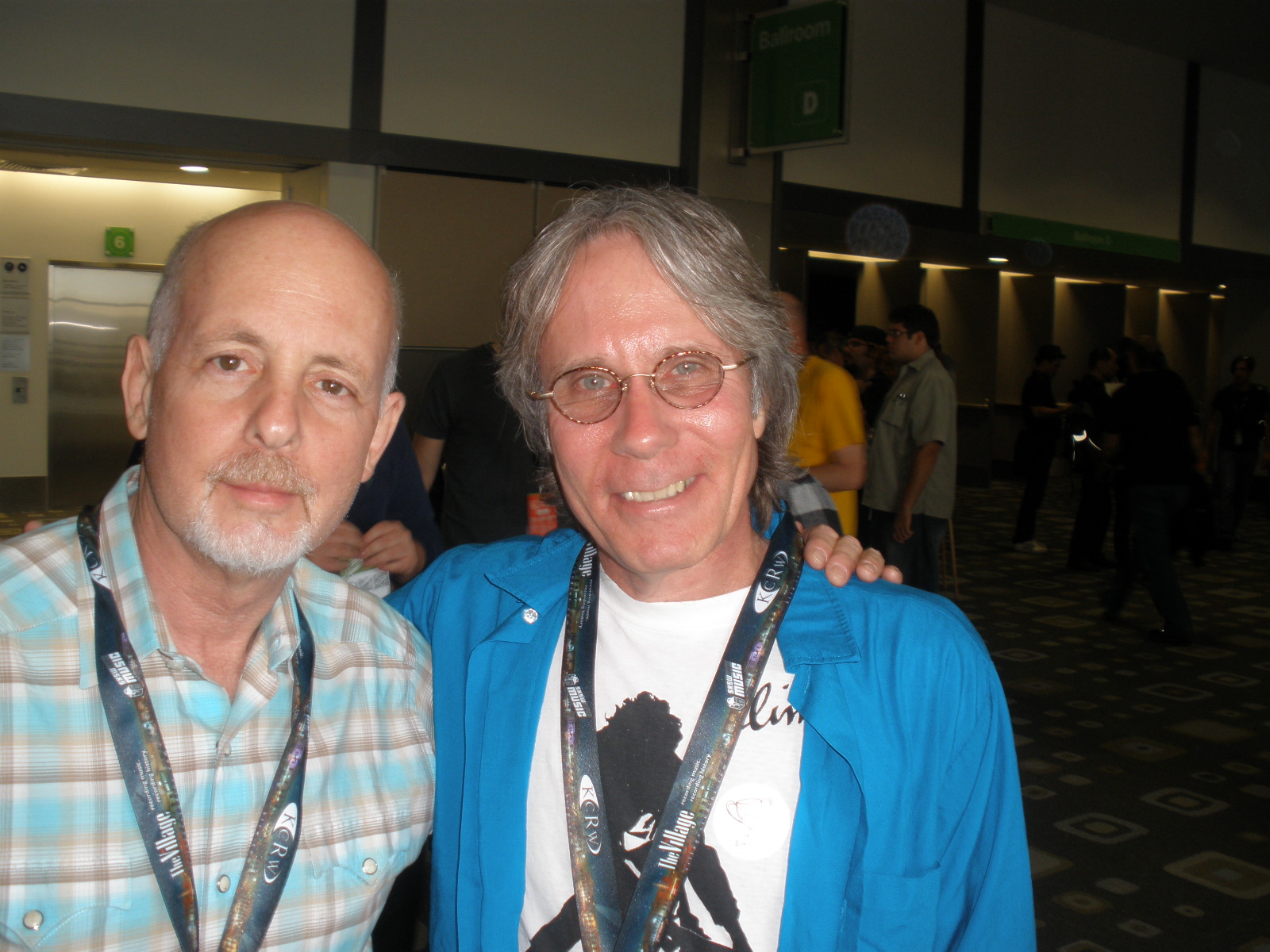
OAR FOLKS: A.S. and Peter Jesperson, Austin Convention Center (3.19.2010)
A month later, no wonder I can’t recall what I did all afternoon on my third day in Austin. But at some point, in the cavernous confines of the Austin Convention Center, I ran into my old friend Peter Jesperson. In 1975-1977, we worked together at Oar Folkjokeopus Records (Minneapolis MN) when he managed the store for owner Vern Sanden; today, Peter is senior VP of A&R for the estimable New West label, where he’s worked with John Hiatt, Drive-By Truckers, and Kris Kristofferson to name a few.
We hopped in my rental car and drove across the river to the Congress Avenue parking lot of a St. Vincent de Paul thrift store that — like every other available space in town, it seemed — had been converted into a music venue for the week. In so doing, we enjoyed that rarest of SXSW commodities, “quality time” — precious minutes of relative peace and quiet in which to carry on an actual audible conversation, catch up on each other’s lives, etc. Peter was another old friend of Alex Chilton who was coping with the shock and pain of his death amid the overwhelming hub-bub of Austin; I think it helped, a little, for him to tell a hilarious Chilton anecdote dating from the re-formed Big Star’s first gig, in 1993 in Columbia, Missouri. Anyway, we soon arrived at our destination to see the L.A.-based country rock band Leslie and the Badgers.
Peter’s enthusiasm for this group is boundless — I remember him carrying on in much the same way over David Bowie’s Station To Station in 1976 — but in this case did not prove wholly contagious. Leslie Stevens is a good singer, reminiscent of Emmylou Harris or Nicolette Larsen, but not an exceptional one; likewise, her band played well but not with any special fire or left-field surprises. My favorite song of the set was the Patsy Cline-inspired “My Tears Are Wasted On You,” a country weeper with a touch of jazz in the chords and melody. Leslie & the Badgers play the Mercury Lounge in NYC on Tuesday, 5/17/2010 — you can listen for yourself on MySpace.
My next stop — and last for the day, as I ended spending a good three hours there — was St. David’s Episcopal Church for a night of new-school UK folk music under the heading “Looking For A New England.” This show was made possible by funding from Arts Council England, i.e. the UK government’s cultural wing. I mention this fact because (a) the gig was truly great, the best multi-act showcase I  attended at SXSW, and (b) it could never have happened without that government support. (Did you know that a US visa for a UK touring artist now costs upwards of $4,500.00?)
In any case, it was with a genuine sense of relief that I took my seat alongside a few dozen other listeners in the church sanctuary, an oasis of calm and tranquility just two blocks from the alcohol-fueled din of the Sixth Street club corridor.
It was now 9:00 p.m. so I’d already missed Gadarene and Olivia Chaney, but vocalist/violinist Jackie Oates (who’s from Dorset) had me from her first number, flawlessly accompanied by Mike Cosgrave on piano and acoustic guitar and James Budden on acoustic bass. I was especially taken with Jackie’s take on the traditional English ballad “Young Leonard” and a very moving lost-love song called “Past Caring,” but the whole set was excellent and later compelled me to purchase Jackie’s latest recording, Hyperboreans, which did not disappoint.
JACKIE OATES - “HYPERBOREANS” with James Dumbleton (acoustic guitar) and Mike Cosgrave (accordion)
Next up was Jim Moray (vocals, electric guitar), who offered a more rock-and-funk infused version of the folk music of the British Isles. Although he didn’t mention it, Jim is Jackie’s brother and he produced her aforementioned Hyperboreans CD, possibly at his own studio in Bristol (there’s no facility credited on the disc). His band included drums, violin, programmed bits from a laptop DJ, and another chap who doubled on violin and hurdy-gurdy. Jim seemed a bit nervous and talked a little too much between his numbers, of which my favorite was a twin-fiddles rendition of “The Wild Boar.” For a Child ballad (the title of which eluded me), Jim brought up rapper named Bubz. This combination almost worked as intended but not quite, and the same could be said of set closer “All You Pretty Girls,” a game attempt at an audience sing-along on this centuries-old sea shanty.
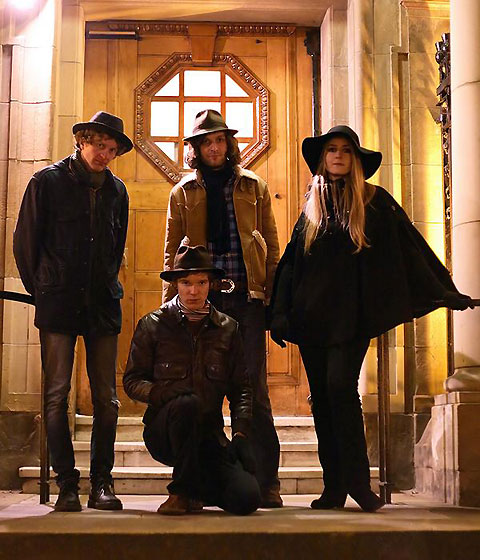
TREMBLING BELLS of Glasgow, Scotland
Trembling Bells, from Glasgow, may have sounded great. But at this point, exhaustion caught up with me and I confess to having nodded off for much of their set. Through the fog of half-sleep, I was stirred occasionally by the combination of Lavinia Blackwall’s pure soprano voice and the buzzing psych-rock flair of Mike Hastings’ lead guitar. Simon Shaw plays bass and the TBs’ excellent drummer Alex Neilson writes the songs. Fans of Fairport Convention, Steeleye Span, and the like should give a listen to Trembling Bells on MySpace.
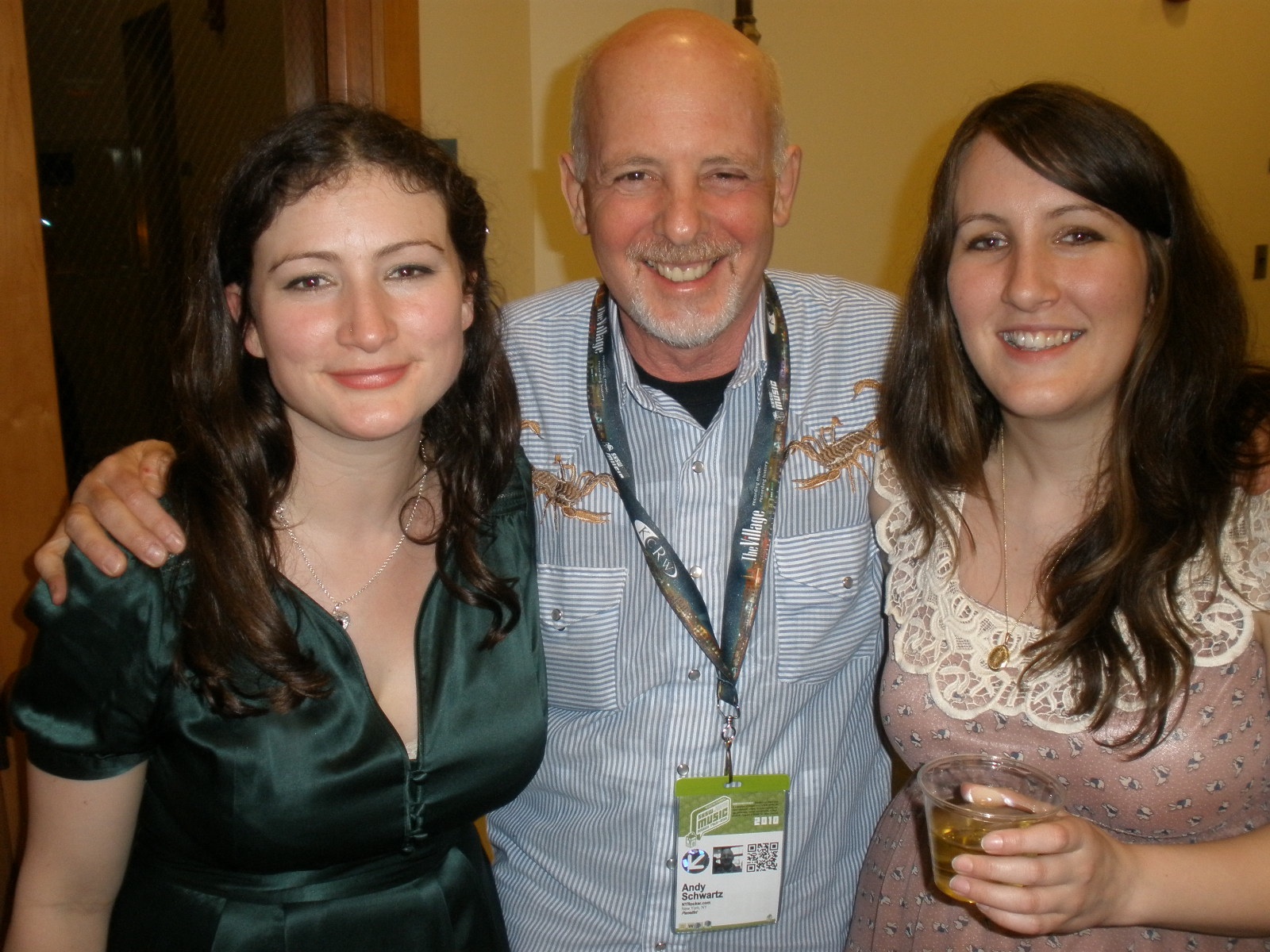
AT ST. DAVID'S, A NEW CONVERT: A.S. with singing sisters Rachel and Becky Unthank.
It was Geoff Travis of Rough Trade who, earlier in the day, had urged me to see The Unthanks: “If you ask me who you should see, Andy, I’ll always name one of my bands because of course I think they’re the best!” I must thank Geoff publicly and profusely for this particular recommendation, because I loved the Unthanks. Initially I thought their name was some kind of punk-rock gesture, like calling your band No Thanks or Thanks For Nothing. In fact, it is the surname of the lead singers Rachel and Becky Unthank, as I would’ve discovered had I ever listened to an earlier version of the group known as Rachel Unthank & Winterset whose 2008 CD The Bairns was nominated for the Mercury Music Prize in the UK.
The Unthanks were at full strength for their SXSW shows with pianist Adrian McNally; Chris Prince on guitar, bass, and ukelele; Dean Ravera shifting with equal skill from drums to acoustic bass; cellist Jo Silverstone, and the radiant violinist and harmony singer Niopha Keegan. They opened with “Twenty Long Weeks,” from Winterset’s 2006 album Cruel Sister, but much of the set was drawn from the Unthanks’ new Rough Trade CD Here’s The Tender Coming. Becky Unthank even did some lively clog dancing on “Betsy Bell,” the hidden bonus track that closes the album.
Of course, I hadn’t heard any of these songs before and perhaps it was due to this surprise factor — combined with a certain emotional susceptibility brought on by lack of sleep — that “The Testimony of Patience Crenshaw” brought tears to my eyes. The story told by the lyrics (in which a young woman coal miner describes her hellish working conditions), the beautifully performed music, Rachel’s heart-piercing lead vocal and even her distinctive Newcastle accent — on that night, in that room, the combination was just devastating. Here’s an earlier (undated) live performance of the song:
THE UNTHANKS - “THE TESTIMONY OF PATIENCE CRENSHAW”
Rachel Unthank later explained to me that this song is not of 19th century vintage but was composed in 1969 by the obscure English folk musician Frank Higgins — who based the lyrics on the written records of the Children’s Employment Commission of 1842, the official inquiry to which the real Patience Crenshaw gave her real testimony. For further insight into the nightmare world of female and child miners during this period of British history, just read this Wiki entry for “hurrying.”
On the road in Europe at this writing (4.23.2010), the Unthanks have a North American tour set to begin in late June including an appearance at Joe’s Pub in New York. I’ll see you there.
Andy Schwartz at South X Southwest 2010 (earlier posts)
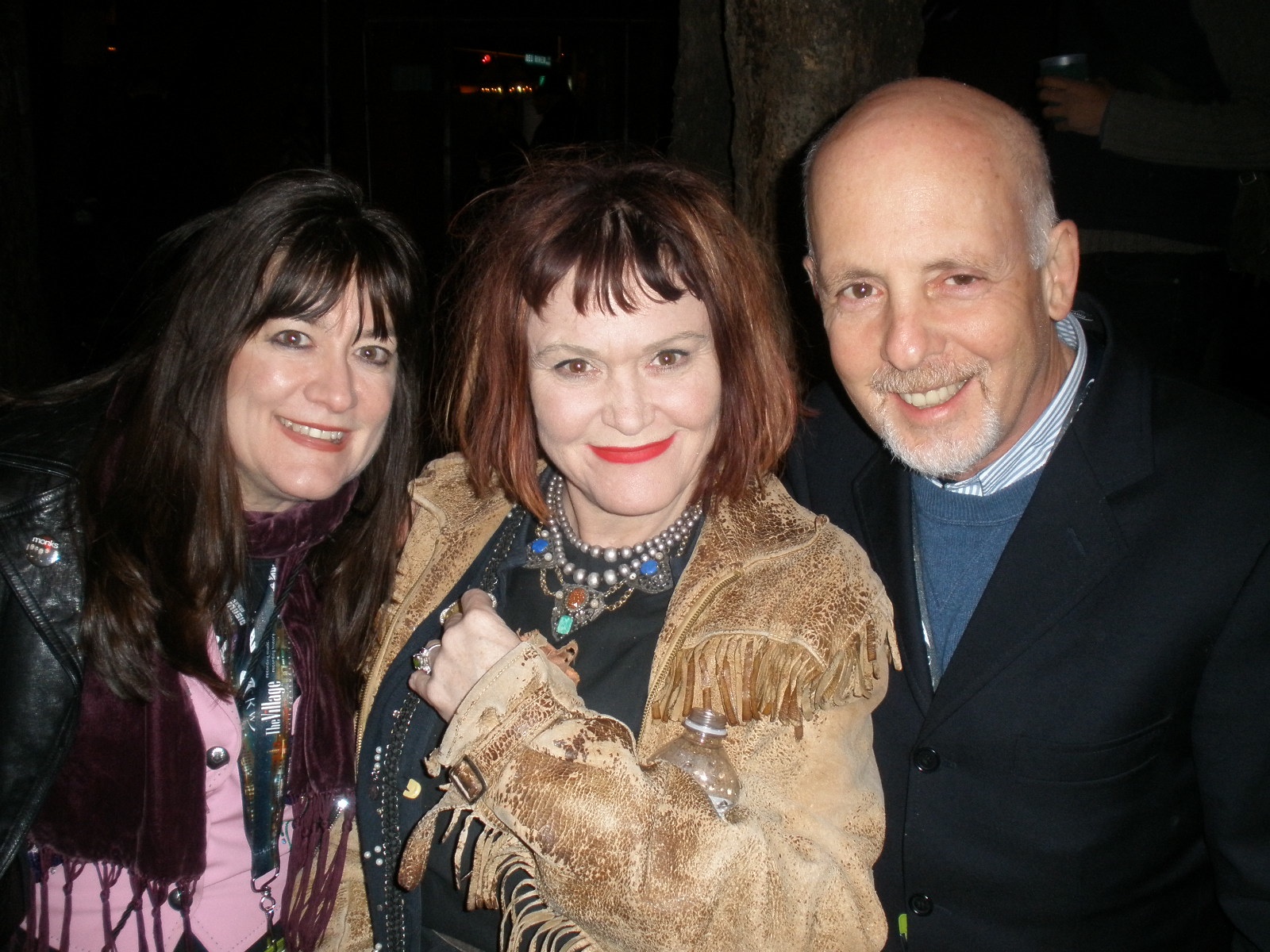
Holly George-Warren, Exene Cervenka, A.S. at the Bloodshot Records showcase @ Red-Eyed Fly (3.20.2010)
My memories of events from 22 years ago can be fuzzy, but I think my attendance at the South X Southwest music conference in Austin TX began in March 1988 with SXSW #2. I came back for 18 consecutive years until 2007, at which point I took two years off from this annual rite of spring before returning on March 15, 2010. I arrived in Austin shortly after 2:00 p.m. on Wednesday 3/17, picked up my rental car, and drove downtown to the Austin Convention Center to pick up the laminated, holographic, computer-coded badge that would admit me to the official showcases, the panel discussions, and all the rest. After checking into my room at the Embassy Suites hotel on South Congress Avenue, I walked with a couple of friends and fellow attendees over to Threadgill’s restaurant for dinner. Two hours later, Holly George-Warren and I were traveling in a hotel van across the Congress Bridge en route to Wanda Jackson‘s set at Beauty Bar when another passenger announced — after receiving a call, email, or Tweet — that Alex Chilton had died suddenly at age 59, just four days before he was scheduled to perform at SXSW with Big Star. Holly nearly screamed out loud before bursting into tears: She and her husband Robert Warren had been Alex’s friends for at least 25 years, and Holly had spoken with Alex just a few weeks earlier. I didn’t know what to say or how to comfort my friend and colleague on this shocking loss: Nothing like this had ever happened in all my years at SXSW, and it was a strange and painful way to begin this one.
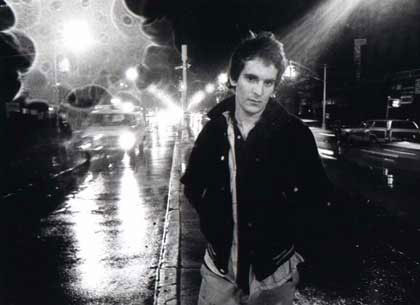
Alex Chilton outside C.B.G.B. - NYC, 1977 Photo: Godlis
(Alex Chilton and I met only once, under strained circumstances in Memphis in 1979, and my memories of the occasion are not especially warm or pleasant. In no way did this encounter diminish my deep appreciation of Alex’s singular talent and especially the three original studio albums he created with Big Star. He lived according to his own code and if you didn’t dig it, that was entirely your problem.)
Not really knowing what else to do, Holly and I continued on to Beauty Bar (a venue with all the warmth and charm of a large storage shed) where Wanda Jackson gamely gave her all while backed by the worst band I’d ever heard her play with. At first I attributed their fumblings to a lack of rehearsal, but as the hour wore on I began to think this was about the best these guys could do — a few days’ rehearsal would have made little dent in their innate lack of feeling for the songs, arrangements, etc. Holly, at least, seemed temporarily lifted just to be in the warm glow of Wanda’s presence, and at one point remarked to me that she held out the faint hope that Alex Chilton had faked his own death “just to get out of playing SXSW with Big Star!”
VINTAGE WANDA JACKSON - “SPARKLIN’ BROWN EYES” (“JUBILEE USA,” 1959?)
When the set ended, Wanda and her husband/manager Wendell retreated backstage — “backstage,” in this case, being a cramped, darkened hallway, piled up with other bands’ equipment and without even a chair for the 73-year-old singer to sit down on. This, I guess, was the best that the staff of SXSW and/or the proprietors of Beauty Bar could do for a Rock & Roll Hall of Fame inductee whose recording career began in 1954. For shame!
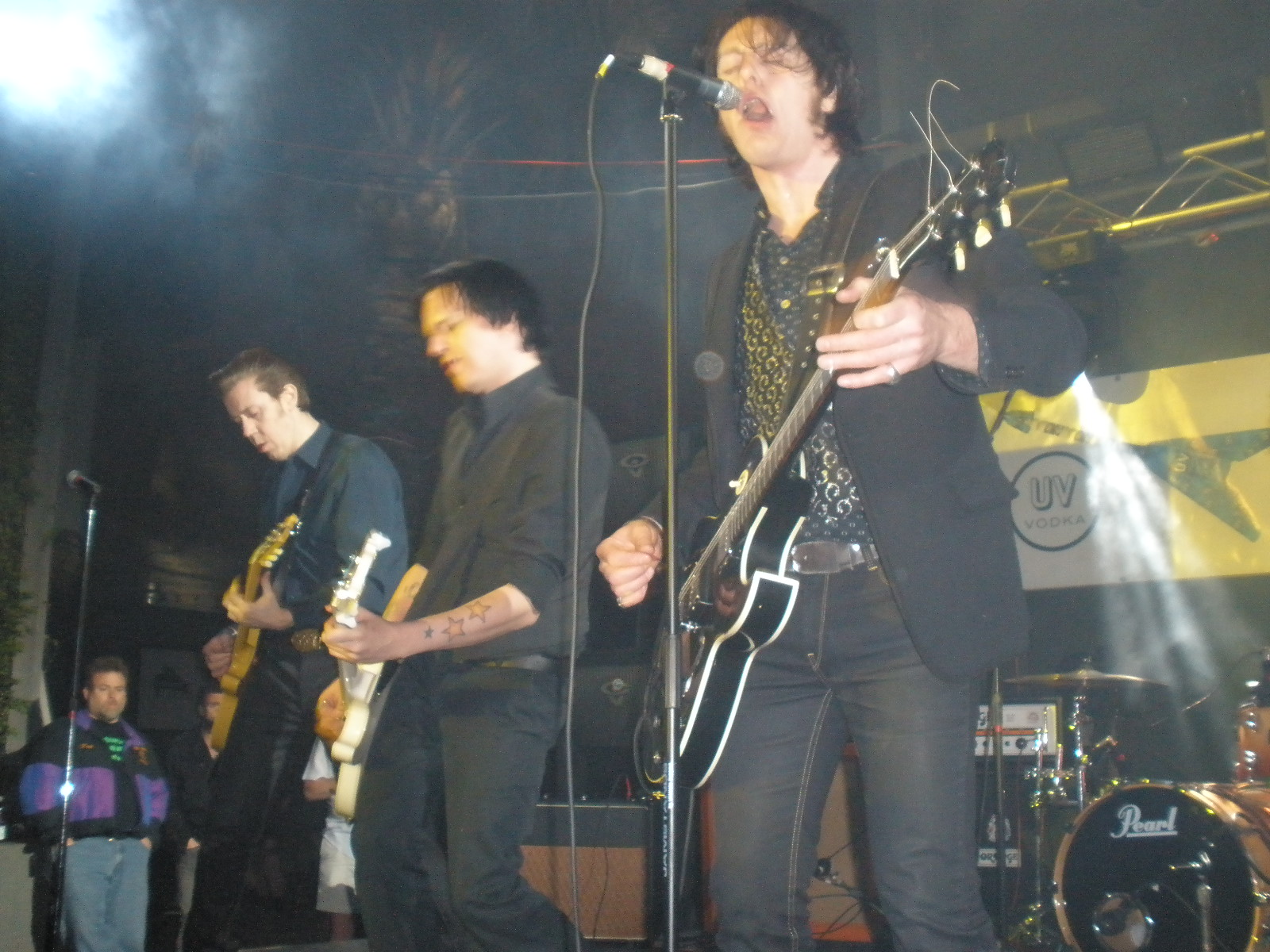
TEAR IT UP! The Jim Jones Revue on stage at Belmont, 3.17.2010. Photo by A.S.
I’m not sure what made me so determined to see The Jim Jones Revue from England: I didn’t own their first album, didn’t know that front man Jim Jones had been in the overlooked Thee Hypnotics (1988-1995), and wasn’t aware that the current band had been in the studio recently with an old NYC acquaintance of mine, Jim Sclavunos of Nick Cave’s Bad Seeds. At midnight, a decent-sized crowd gathered on the patio of a bar called Belmont and waited patiently while drums were set up, sound levels checked, etc.
Guess what? These guys killed. The Jim Jones Revue lift all their song structures straight from Fifties R&B, bolt on some witty and/or bitter lyrics, then drive the whole thing through a howling wind tunnel of overdriven guitars, pounding Jerry Lee/Jim Dickinson piano, and an unstoppable rhythm section. It’s kinda like Richard Hell & the Voidoids playing the music of Fats Domino, and it had me rockin’. (Come to think of it, the Voidoids did play Fats Domino a few times — a live cover of “I Lived My Life” — and while Jim Jones and Rupert Orton may not be the sophisticated jazz-influenced guitarists that Robert Quine and Ivan Julian were, they’ve still got that go-for-the-throat intensity.)
THE JIM JONES REVUE - “ROCK ‘N’ ROLL PSYCHOSIS”
It was after 1:0o a.m. and tomorrow would be another day at South X Southwest. This one, for me, was now over.

Dr. Albert C. Barnes by Giorgio de Chirico (1926)
On Thursday 11/26/09, Leslie and I along with my parents, Howard & Phyllis Schwartz, drove down to Philadelphia for the Thanksgiving weekend. We’d made a reservation for 12 noon Saturday to tour The Barnes Foundation in the Main Line suburb of Merion, PA. My folks had visited this unique museum many years before but Leslie and I were seeing it for the first time.
I’m neither an artist nor an art critic, and my museum-going résumé doesn’t include visits to the Louvre in Paris, the Museo del Prado in Madrid, or the State Hermitage in St. Petersburg, to name a few notable omissions. But in the span of my own experience, the Barnes was a unique and utterly distinctive way to experience art, specifically the Impressionist and Post-Impressionist paintings of the late 19th and early 20th centuries.
And there’s a hell of a lot of it to look at: In the 40-plus years before his death in a 1951 car accident Dr. Albert C. Barnes (born 1/2/1872 in Philadelphia to a poor working-class family) amassed the greatest private art collection in North America. In the 2003 edition of his book Art Held Hostage: The Battle Over the Barnes Collection, investigative journalist John Anderson wrote that the collection “is valued at more than $6 billion [This is not a typo — A.S.] … including some 69 Cezannes (more than in all the museums in Paris), 60 Matisses, 44 Picassos, 18 Rousseaus, 14 Modiglianis, and no fewer than 180 Renoirs…”
Barnes made a fortune circa 1900 with a silver nitrate-based antiseptic called Argyrol, which was widely administered to infants in eyedrop form; he began collecting art around 1910, and is alleged to have paid $100 for his first painting by Picasso. In 1925, construction of the building that houses the Barnes Foundation galleries (as well as the founder’s private residence) was completed on a 12-acre estate in Merion, PA; four years later, Dr. Barnes sold his company and devoted the rest of his life to collecting and to the Foundation. In his will, the childless Barnes dedicated the bulk of his fortune to the perpetuation of the Foundation along with a long list of explicit, ironclad instructions. Foremost among these was that none of the works would ever be sold or incorporated in touring exhibitions; that admission to the grounds would be strictly limited (it was by invitation only during Barnes’ lifetime); and that the collection would be displayed, in perpetuity, exactly as the good doctor himself had placed the paintings, furniture, light fixtures, etc. within the galleries.
Barnes’ eccentric and very personal arrangements of his works have the effect of turning Great Art into something more intimate and human, less entombed and intimidating in their Overwhelming Greatness. Compared to, say, the Metropolitan Museum of Art, his displays are very crowded (see photo at right); the paintings are not organized chronologically and there are no title plaques on the walls (viewers use laminated identification sheets instead). Barnes’ singular and stoutly-defended interpretation of what he considered the key elements in any

A Gallery at the Barnes Foundation
given work of art led him to add metal wall-hangings, inspired by/akin to certain lines and shapes within the paintings; and to place antique chairs, chests, and candelabra beneath certain canvases. These objects bear what I’d call a quasi-mystical relationship to the paintings, except that for Albert Barnes there was nothing “mystical” about it. Speaking to students, scholars, and artists, he would explain — in concise and almost clinical terms, very different from the language of art criticism then or now — the specific visual ways in which these objects, their lines and planes, related to and mirrored each other. (Excerpts from Barnes’ monologues are preserved on the present-day audio tour of the collection.)

THE FACTORY by Vincent Van Gogh (1887)
Some of my own favorite works on display at the Barnes included Van Gogh‘s The Factory and one of his seven portraits of The Postman Joseph Roulin; Cezanne‘s epic Card Players (1890-92); Renoir‘s large-scale painting of his family including his infant son, the future film director Jean Renoir; and various works by Modigliani including Young Redhead In An Evening Dress (1918) and Portrait of Leopold Zborowski (1919). The Barnes collection also includes several cabinets filled with African sculptures and masks; and a set of Native American blankets from the Southwest, unusually large pieces that are gorgeously woven and in impeccable condition.
I consider myself very fortunate to have seen the Barnes collection as Albert Barnes intended it to be seen, because that opportunity soon will be lost to future generations. This 12/7/09 article on the Web site of the Los Angeles Times reports that on January 2, 2010, five second-floor galleries will be closed and turned into a conservation suite so that their contents may be dismantled and prepared for eventual transportation to the Foundation’s controversial new $150-million building on the Benjamin Franklin Parkway in central Philadelphia, now under construction and slated for completion in 2012.
The reasons why and how this turn of events has come to pass are far too complex to discuss here; interested readers should turn, for starters, to John Watson’s Art Held Hostage. In his remarks at the 11/13/09 groundbreaking ceremony for the new museum, Barnes Foundation chairman Bernard Watson said:
“The final decade of the 20th century had seen the foundation incurring annual deficits and depleted financial resources, resulting, in large part, from an endless series of expensive and acrimonious lawsuits, going back as early as the 1950s. The foundation’s ability to prosper, or indeed survive, in its Merion location was exacerbated by local regulations limiting visitation to the galleries…Philanthropists and foundations were simply not giving money to an organization that had a legacy of expensive and distracting litigation, no credible business plan, or a governance structure that would make implementation of such a plan possible. None of the people who continue to raise their voices in angry objection to moving the collection to the Parkway reached into their pockets to support us in any meaningful way in Merion.”

YOUNG REDHEAD IN AN EVENING DRESS by Amedeo Modigliani (1918)
In his L.A. Times post, on the other hand, Christopher Knight noted:
“Most every art and cultural critic who has written on the subject has opposed the plan, which will shutter the astounding Post-Impressionist and early Modern art collection in suburban Merion, dismantle what ranks as the greatest American cultural monument of the first half of the 20th century and relocate the art five short miles to a hoped-for tourist venue downtown.”
Finally, my good friend Jay Schwartz, lifelong Philadelphia resident and dedicated preservationist of the city’s cultural and architectural treasures, wrote me in an 11/30/09 email:
“I do NOT think it makes more sense for the collection to be in Center City. The decision calls into question the validity of all wills. I do not think it was effectively demonstrated that there was no other good option. One…would have been to sell off some paintings to get [the Foundation] back on [its] feet. While this [sale] is also forbidden by the will, I think Dr. Barnes would have preferred this option.
“I also think the current location is perfect, beautiful, and NOT so difficult to find or get to. The collection is more accessible than ever before, and that if someone cannot make the small effort that you just made (‘small’ once you are in Philadelphia, that is), they probably don’t need to see it.
“Of course, another solution would be for the various parties that saw the opportunity to hijack the collection to have donated a tiny fraction of what the move will cost [in order] to keep things as they were — that would have fixed everything. They had no interest in that, though, only in doing things their way and to benefit what they wanted to benefit.
“While I have not read [John Anderson’s] book, I feel I am familiar enough with the events to make these judgement calls. It was a freakish chain of events that made all of this happen, and there were no good guys in the ugly story, except for the hapless Friends of the Barnes (former students), whom the last judge decided had no legal standing.”

-
 Subscribe